
 By Juancho · November 10, 2026
The moka pot is the little stovetop coffee maker you’ll find in kitchens from Italy to Latin America. Where I come from we don’t even call it a moka pot: in Venezuela, the Dominican Republic, Puerto Rico and Colombia it’s a greca, and there has always been one in my house. It’s cheap, it lasts for years and it makes a strong, rich cup. It’s also easy to get wrong. If your moka pot coffee tastes bitter or burnt, the fix is almost always the same three things: the grind, the heat and when you take it off the stove.
As an Amazon Associate, Juanchocoffee earns from qualifying purchases. It costs you nothing extra.
Jump to: What it is · How it works · Step by step · Sizes · Mistakes · Moka pot vs espresso · Cleaning · Which one to buy · FAQ
What is a moka pot?
A moka pot is a stovetop brewer that uses steam pressure to push hot water up through ground coffee. You’ll also see it called a stovetop espresso maker, an Italian coffee maker or, in Spanish, a cafetera italiana or greca.
It comes from Italy. Alfonso Bialetti, an aluminum maker, started selling the Moka Express in 1933, and his company still makes it in the same eight-sided shape. Several sources credit the design to Luigi De Ponti, an engineer who worked with Bialetti. The name comes from Mokha, the Yemeni port city famous for its coffee. It sold slowly at first. It was Alfonso’s son Renato who, after World War II, turned it into an Italian icon with heavy advertising and the “little man with the mustache” still printed on every pot.
How does a moka pot work?
There are three parts: the bottom chamber for water, the funnel basket for coffee, and the top chamber where the brewed coffee collects. As the pot heats up, trapped air and steam build pressure in the base and push the hot water up through the coffee.
That pressure is low: about 1 to 2 bars. The small valve on the base is a safety valve that releases steam if pressure climbs too high, which is why the water should never cover it.
How to use a moka pot, step by step
- Grind right before brewing. Aim for medium-fine: finer than drip, coarser than espresso, about like table salt. An espresso-fine grind chokes the pot and turns the coffee bitter.
- Fill the base with water to just below the valve. I use hot water, just off the boil, so the pot spends less time on the stove and the grounds don’t cook before brewing starts. The traditional Italian way is cold water, and it works too if you keep the heat low. Try both.
- Fill the basket level, and don’t tamp. Level it with a finger or a light tap. A moka pot isn’t built for packed coffee.
- Wipe the rim and screw it on tight. Stray grounds on the threads or the gasket let steam escape. If you used hot water, hold the base with a towel.
- Low to medium-low heat, lid open. On gas, the flame shouldn’t reach past the base. With the lid open you can watch the brew.
- Watch the stream. It starts dark and thick, then turns lighter, like honey.
- Pull it early. When the stream goes pale and starts to sputter and gurgle, take it off the heat and close the lid. The last bit is the most bitter.
- Stop the brew. Run the base under cold tap water for a few seconds, or set it on a damp towel.
- Stir and pour right away. The first coffee up is stronger than the last, so a quick stir evens out every cup.
Moka pot sizes: 3-cup vs 6-cup
A moka “cup” is an espresso-size serving of about 2 oz, not a mug. And you don’t measure with a scoop: the valve tells you how much water, the basket tells you how much coffee.
- 3-cup: makes about 4.4 oz (130 ml), per Bialetti. The basket holds roughly 15–17 g of coffee. Right for one or two people.
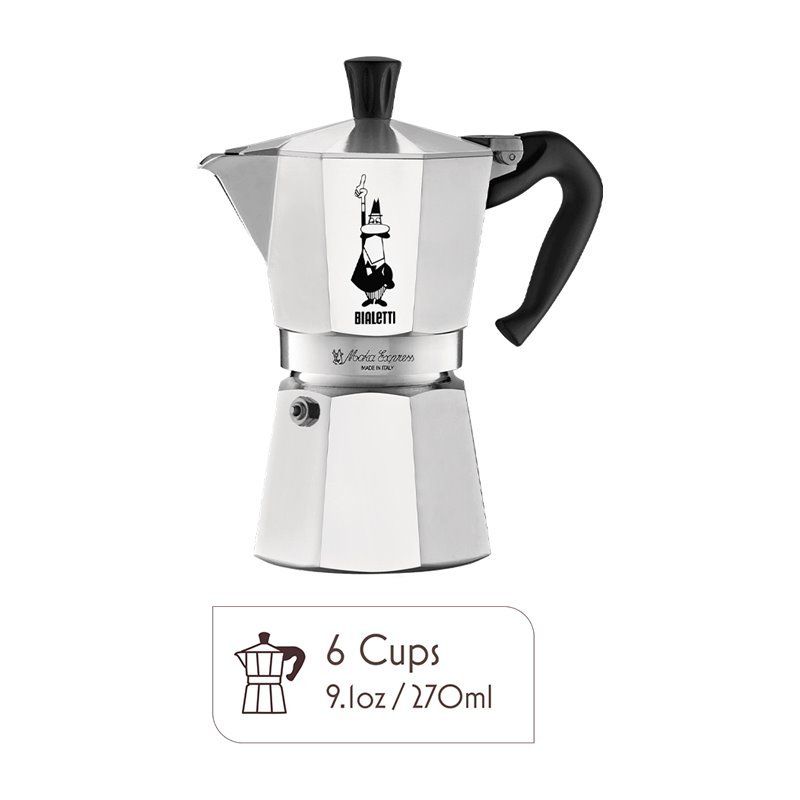
- 6-cup: makes about 9 oz (270 ml). The basket holds roughly 28–30 g. Right for three or four people, or two who drink it with milk.
Those gram figures are a starting point and shift a little with the coffee and the grind. A coffee scale helps you repeat the same recipe every day.
Always brew a full pot. Half the water or half the coffee gives you a weak or bitter cup. If you usually drink alone, a 3-cup pot beats a half-filled 6-cup.
Common moka pot mistakes
- High heat. Faster, but it tastes burnt. Turn it down.
- Tamping the coffee. Bitter coffee, or none at all. Keep it loose and level.
- Grinding too fine. Bitter, with sludge in the cup. Go a little coarser.
- Grinding too coarse. Thin and sour. Go a little finer.
- Leaving it on until it stops gurgling. That final spurt is pure bitterness.
- Water above the valve. A safety risk, and it wets the grounds too soon.
- Storing it wet and screwed shut. It picks up stale smells. Dry it and store it loosely assembled.
- Stale coffee. No technique rescues coffee ground months ago.
Moka pot vs espresso vs French press
Does a moka pot make espresso? Not quite. Espresso is brewed at around 9 bars of pressure; a moka pot reaches 1 to 2. You get a strong, concentrated coffee with little or no crema. It’s closer to espresso than drip is, and it holds up well in a latte or a café con leche.
- Moka pot: low pressure, medium-fine grind. Bold and concentrated. Inexpensive, no electricity needed.
- Espresso machine: about 9 bars, very fine grind. A short, dense shot with crema. It needs a machine and a capable grinder, so it’s the priciest route with the steepest learning curve. If that’s where you’re headed, see my home espresso setup guide.
- French press: no pressure; coarse coffee steeps in hot water for about 4 minutes. A big, full-bodied mug with some sediment. The easiest of the three.
Cleaning and care
- After every brew: let it cool, take it apart and rinse every piece with warm water. Bialetti says its pots need only water: no soap, no dishwasher.
- Dry it completely before putting it back together.
- Every so often: pull out the gasket and the upper filter and clean underneath. Check that the safety valve isn’t clogged.
- Replace the gasket when it gets hard or cracked, or when the pot starts leaking at the threads. It’s a cheap part sold by pot size.
Aluminum vs stainless steel
- Aluminum (the classic): light, quick to heat and cheaper. Keep it out of the dishwasher, which turns it dull and gray. It won’t work on induction.
- Stainless steel: costs more, shrugs off daily use and works on induction.
Both work on gas and electric stoves. If you have an induction cooktop and already own an aluminum pot, an induction adapter plate sits between the burner and the pot.
Which moka pot should you buy?
Bialetti Moka Express: the aluminum original
 Check price on Amazon →
The original, made in Italy since 1933, and the less expensive of the two. It comes in many sizes and works on gas and electric stoves, but not on induction. Price range: $.
Image: Bialetti
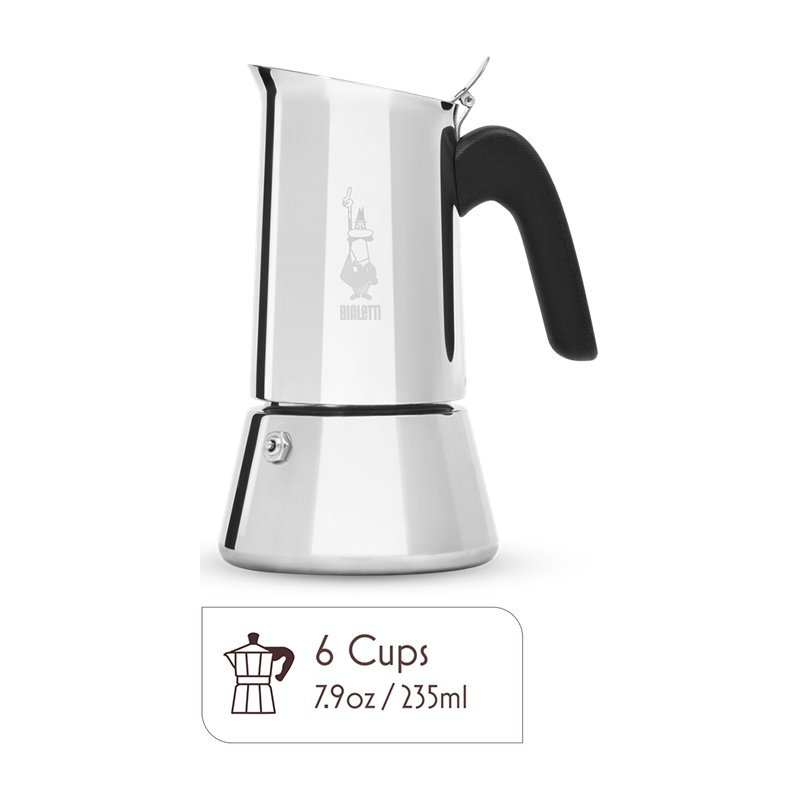
Bialetti Venus: stainless steel, induction-ready
 Check price on Amazon →
18/10 stainless steel that works on gas, electric and induction, per Bialetti. Reviewers like how simple it is and that the handle stays cool; critics say the inside is awkward to clean and that it takes some dialing in to brew well. Price range: $$.
Image: Bialetti
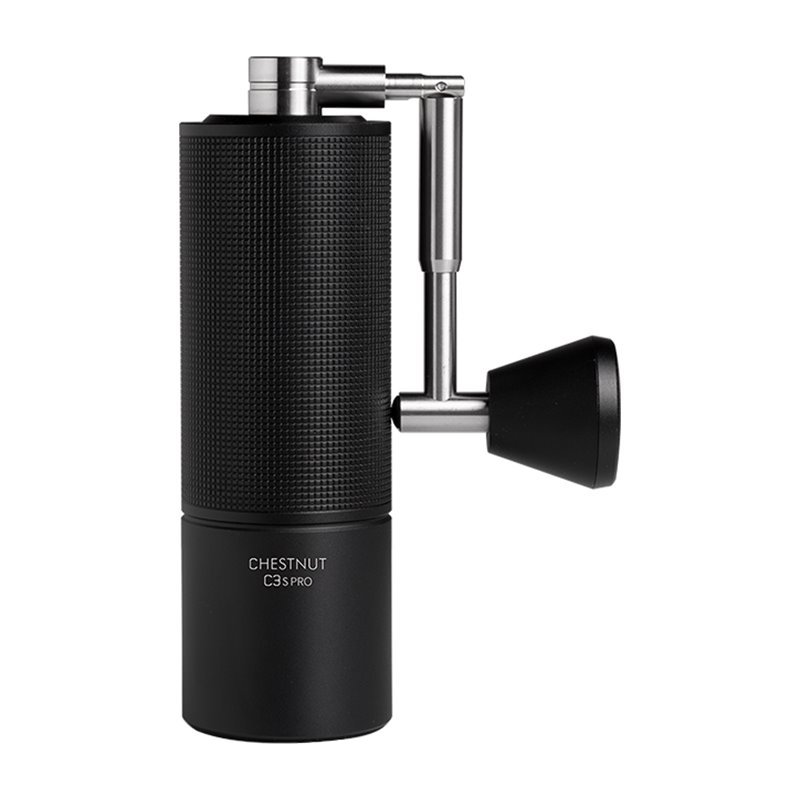
A grinder, the upgrade you’ll taste most
 Check price on Amazon →
Pre-ground coffee is rarely the right size for a moka pot. A hand grinder like this one grinds enough for a 3-cup pot and lets you adjust until the bitterness is gone. Price range: $$.
Image: Timemore
Moka pot FAQ
Can you use a moka pot on an electric stove?
Yes. Bialetti lists the Moka Express for gas and electric stovetops. Use a burner close to the size of the base and keep the heat at medium-low, since electric coils stay hot after you turn them down.
Does a moka pot work on induction?
Only if it’s stainless steel or labeled for induction. Aluminum pots need an adapter plate.
How long does a moka pot take?
A few minutes. It depends on the size of the pot and your stove, and it’s noticeably quicker if you start with hot water. Slow and gentle beats fast and scorched.
Should I start with hot or cold water?
Both work. Hot water shortens the time the coffee sits on the heat and usually means less bitterness. With cold water, keep the heat low and be patient.
Why is my moka pot coffee bitter?
Usually too much heat, too fine a grind, or leaving it on the stove until the very end. Fix those three first.
What coffee is best for a moka pot?
Fresh coffee you like. Medium and medium-dark roasts are the most forgiving. If you buy it pre-ground, look for “moka” or “espresso” grind on the bag.
What is a greca?
It’s what many Caribbean and Latin American homes call the moka pot. Same brewer, same method, different name.
Keep going
For the Venezuelan way to drink it, read How to Make Venezuelan Coffee at Home: Guayoyo and Moka Pot. And if you’re still choosing a brewer, my comparison tool puts the moka pot next to the V60, the AeroPress and the French press.
What do you call it at home, and what’s your trick? Tell me in the comments.
As an Amazon Associate, Juanchocoffee earns from qualifying purchases.
Leave a comment