
 By Juancho · October 7, 2026
People ask me all the time which espresso machine they should buy. My answer usually surprises them: the machine is only one of three pieces. Good espresso at home takes a machine, a grinder and a scale. If one of them is off, your shots come out bitter, watery or different every morning.
In this guide I’ll walk you through what each piece does, what to look for, and three setups depending on your budget and your routine.
As an Amazon Associate, Juanchocoffee earns from qualifying purchases. It costs you nothing extra.
1. The machine: stable pressure and temperature
Espresso is hot water pushed under pressure through very finely ground coffee. What separates a good home machine from a bad one is stable temperature and pre-infusion: wetting the puck at low pressure before the full extraction, so the water flows through evenly. Both Breville machines I recommend do both.
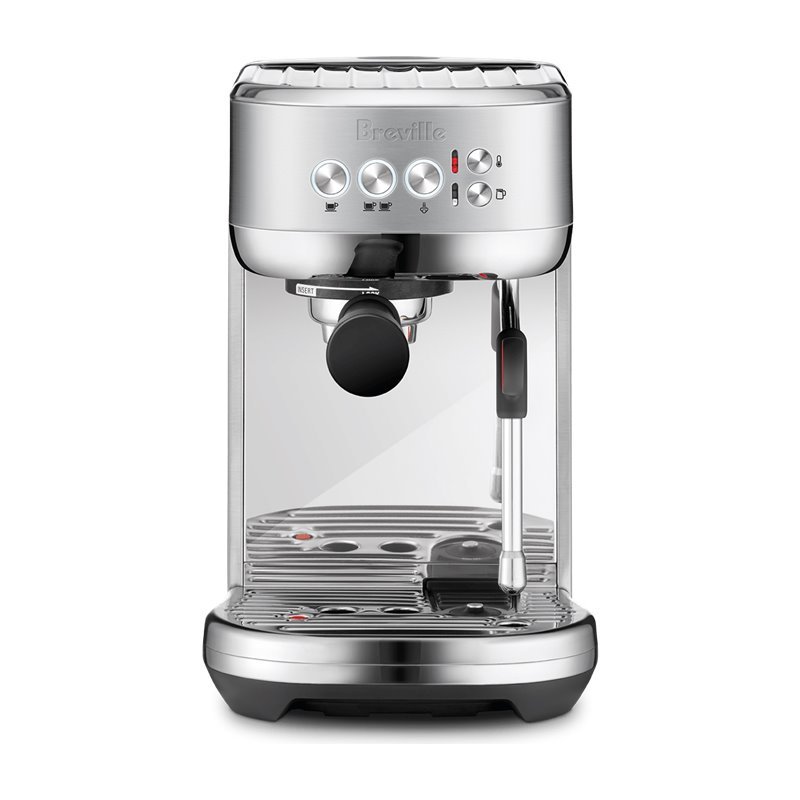
Breville Bambino Plus: the easiest
 Check price on Amazon →
It heats up in about 3 seconds and has an automatic steam wand: set the pitcher, pick a temperature and texture, and you get silky milk with zero practice. It’s compact enough for any kitchen. The catch: there’s no grinder built in, so you’ll need to add one.
Image: Breville
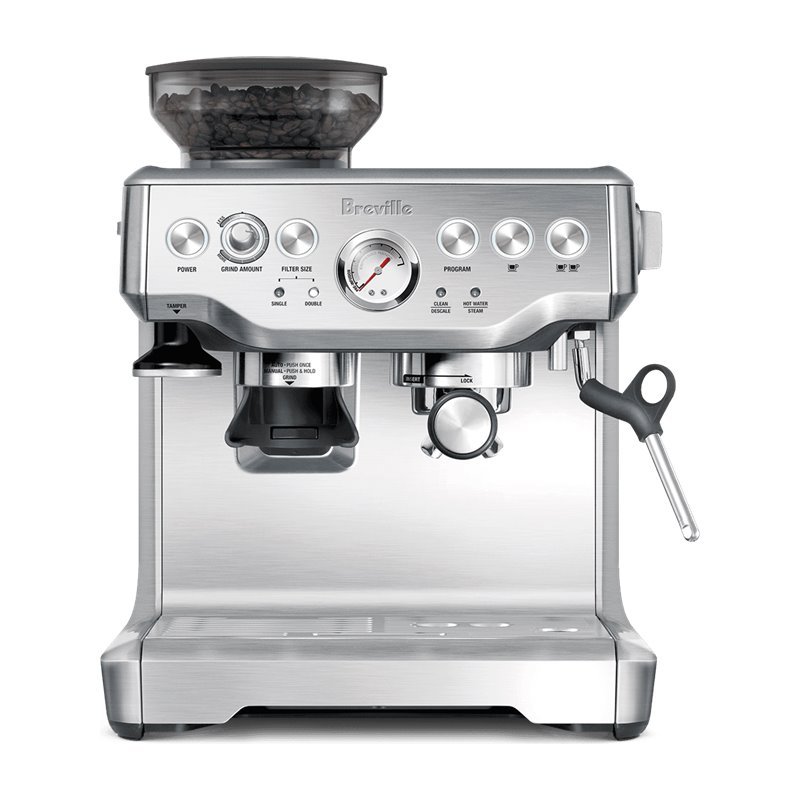
Breville Barista Express: all in one
 Check price on Amazon →
It has a built-in grinder that doses straight into the portafilter, plus a manual steam wand that teaches you to texture milk like a café barista. It takes up more counter space and has a steeper learning curve: expect to adjust your grind several times in the first few weeks until you dial it in.
Image: Breville
2. The grinder: the most underrated piece
If I had to choose where to spend more, it would be the grinder. Espresso needs a grind that is very fine and very even, with small adjustment steps, because the tiniest change transforms the cup. Pre-ground coffee won’t cut it: it’s ground for drip machines and starts losing aroma minutes after you open the bag.
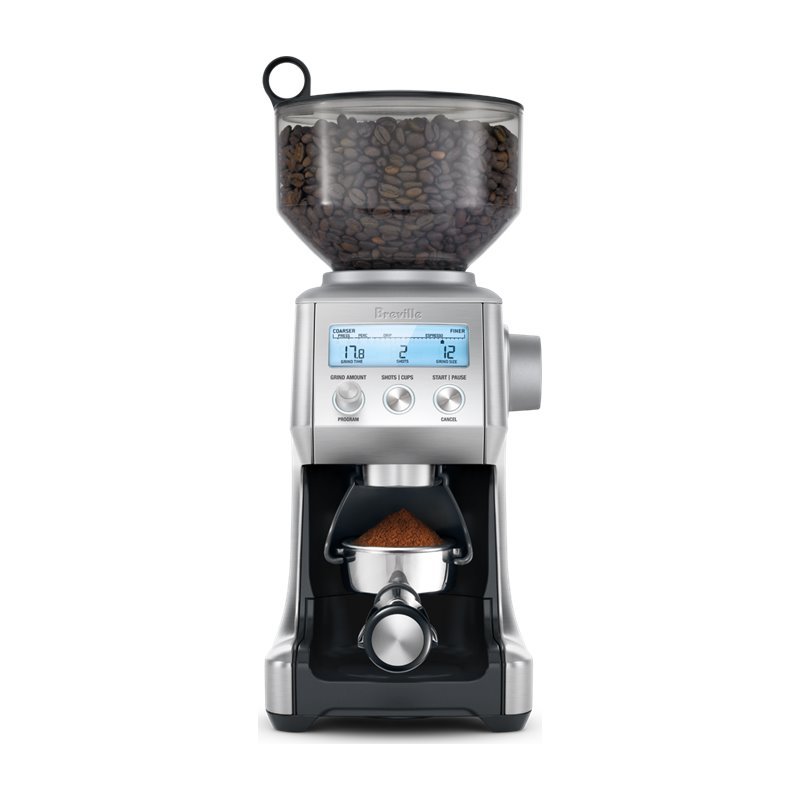
Breville Smart Grinder Pro
 Check price on Amazon →
Conical burrs, 60 settings from espresso to French press, and timed dosing. It’s the natural partner for the Bambino Plus and the most versatile grinder in my comparison tool.
Image: Breville
Heads up: not every grinder can do espresso. The Baratza Encore, for example, is excellent for pour-over and drip, but it doesn’t grind fine enough for espresso.
3. The scale: the cheap upgrade that changes everything
Baristas don’t eyeball espresso or go by the size of the cup. We measure it in grams and seconds. A 0.1 g scale with a timer lets you repeat the same recipe every day and, when a shot goes wrong, know exactly what to change.
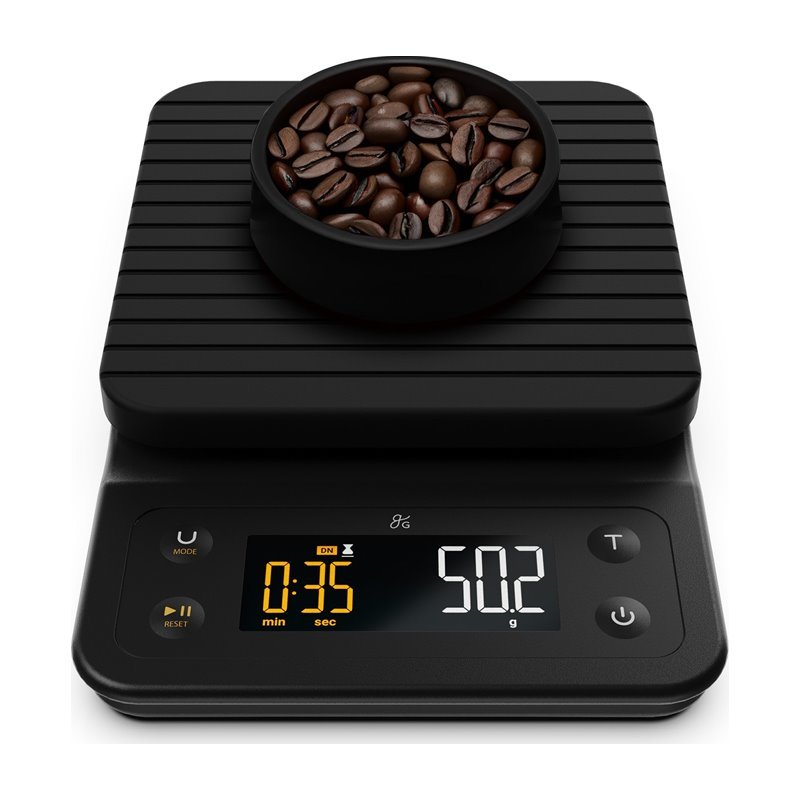
Greater Goods Coffee Scale with timer
 Check price on Amazon →
0.1 g precision, a built-in timer and a heat-resistant silicone cover. It fits under the portafilter on most home machines.
Image: Greater Goods
Three setups for three routines
- “I want lattes, not a hobby”: Bambino Plus + Smart Grinder Pro + scale. The milk takes care of itself and you only focus on the shot.
- “I want to learn like a barista”: Barista Express + scale. One machine on the counter and full control in your hands.
- “I have 5 minutes in the morning”: be honest with yourself. If you won’t have time to grind and dial in, a Nespresso Vertuo Pop+ will make you happier. I use Nespresso on busy days too. It isn’t machine espresso, but it’s fast and consistent.
Your first recipe
A solid starting point for most coffees:
- 18 g of coffee, finely ground, in the double basket.
- Distribute and tamp evenly, keeping the tamper level.
- Put your cup on the scale, tare it, and start the timer with the shot.
- Aim for about 36 g of espresso in the cup in 25 to 30 seconds.
Ran too fast and tastes sour? Grind finer. Ran too slow and tastes bitter? Grind coarser. Change one thing at a time and pull another shot.
Common beginner mistakes
- Stale coffee. Buy bags with a roast date and use them within the following weeks.
- Skipping the preheat. Run water through the portafilter and into the cup before you brew.
- Changing everything at once. If you move grind, dose and time together, you’ll never know what worked.
Want to compare these machines and grinders side by side? They’re all in my comparison tool. And if you’re buying this week, check my Prime Day coffee deals first: several of these are on sale. Questions? Message me on Instagram at @juanchocoffee.
As an Amazon Associate, Juanchocoffee earns from qualifying purchases.